THE PROCESS
Shape comes from the die
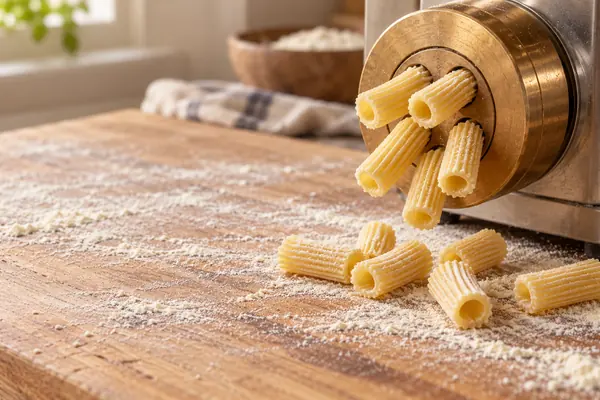
Extrusion pushes a material through a die to give it a fixed cross-section. Short shapes such as penne and fusilli are extruded; the die's size and shape decide the result.
Compare the dies doodlestruder
00WHAT THE STUDIES FOUND
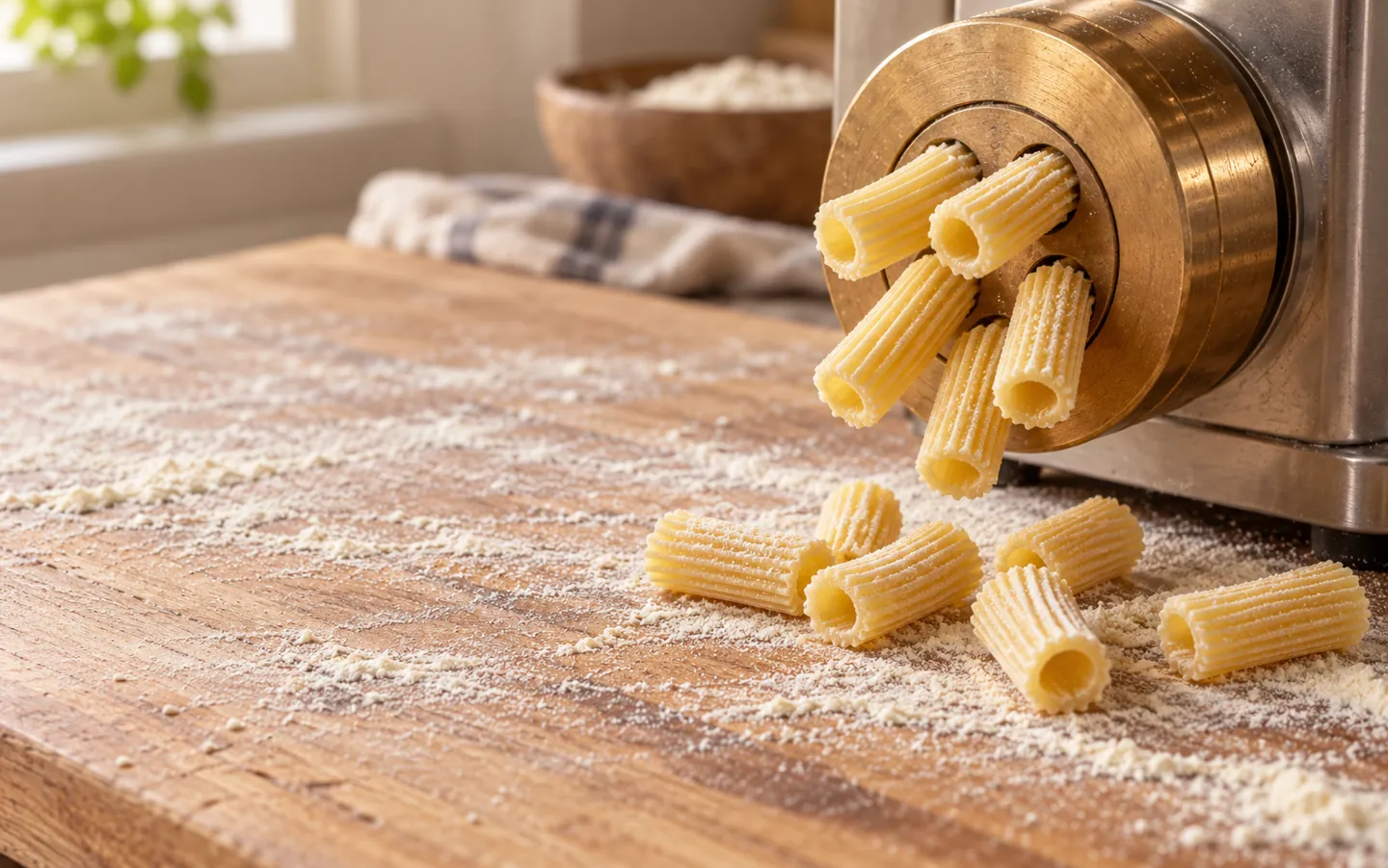
Most dried pasta is made by extrusion.
A stiff dough of durum semolina and water is forced through a shaped die, like toothpaste from a tube. The material of that die, traditional bronze or a smooth non-stick plastic, changes the surface you can see and feel.
Compare the dies01Principles
02THE SHORT ANSWER
Extrusion gives pasta its shape.
The die it passes through gives it its skin.
THE PROCESS
Extrusion pushes a material through a die to give it a fixed cross-section. Short shapes such as penne and fusilli are extruded; the die's size and shape decide the result.
Compare the diesTHE SURFACE
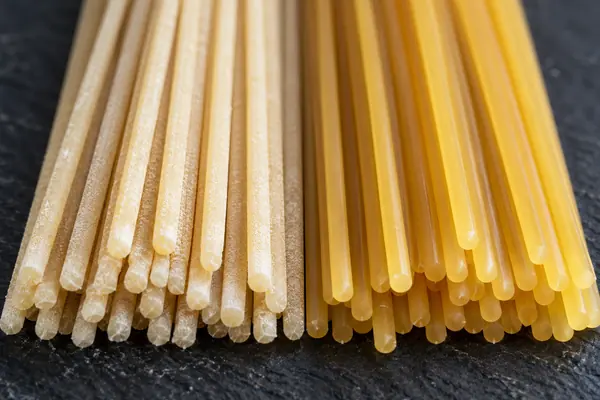
Kyoto University researchers found spaghetti from a bronze die was the roughest, then aluminium, polypropylene and polycarbonate, with PTFE (non-stick) the smoothest.
See the numbersTHE COOKING
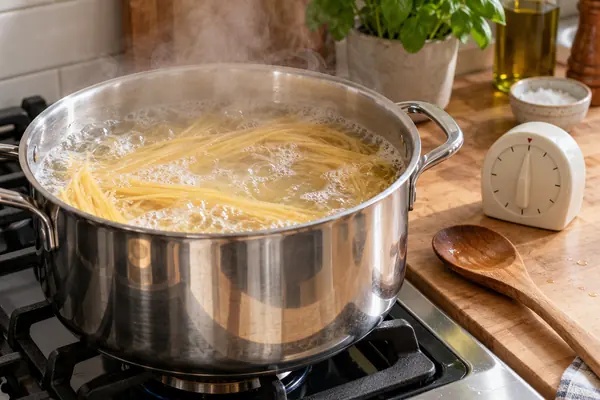
Because of its rougher surface, bronze-die spaghetti took about a minute less to cook than spaghetti from a non-stick die in their tests.
What it means03WHICH DIE?
Pick a die material to see how rough the spaghetti came out in laboratory tests. The bar shows the roughness of the surface.
Same semolina, water and drying for every sample; only the die material changed.
04TWO NUMBERS WORTH KNOWING
One figure on the surface,
one on the pan.
≈ 60 µm
Peak surface depth, bronze and aluminium dies
Laser-scanning microscopy showed bronze and aluminium dies gave broad distributions peaking near 60 micrometres, against sharp peaks of about 20 to 40 µm for plastic dies.
SURFACE · FSTR 2017
≈ 1 minute
Shorter cooking time, bronze vs non-stick die
Because of its rougher surface, bronze-die spaghetti cooked in approximately a minute less than spaghetti from a PTFE die. Its gelatinisation temperature was the same.
COOKING · KYOTO UNIVERSITY
The same researchers note that the popular claim that bronze-die pasta holds more sauce 'remains to be empirically validated'.
05FOUR THINGS TO NOTICE
You can see the die's work in the packet. None of this makes one pasta better for everyone; it explains why they look and cook differently.
In the studies, bronze-die spaghetti had a visibly rougher surface and non-stick-die spaghetti a smoother one.
Rougher pasta takes up water faster at first; in lab tests bronze-die spaghetti cooked about a minute sooner.
Short shapes like penne and fusilli are extruded; the die's profile makes the ridges and twists.
Rough pasta may cling to sauce, but researchers say this has not yet been tested properly.
06WHY NON-STICK DIES
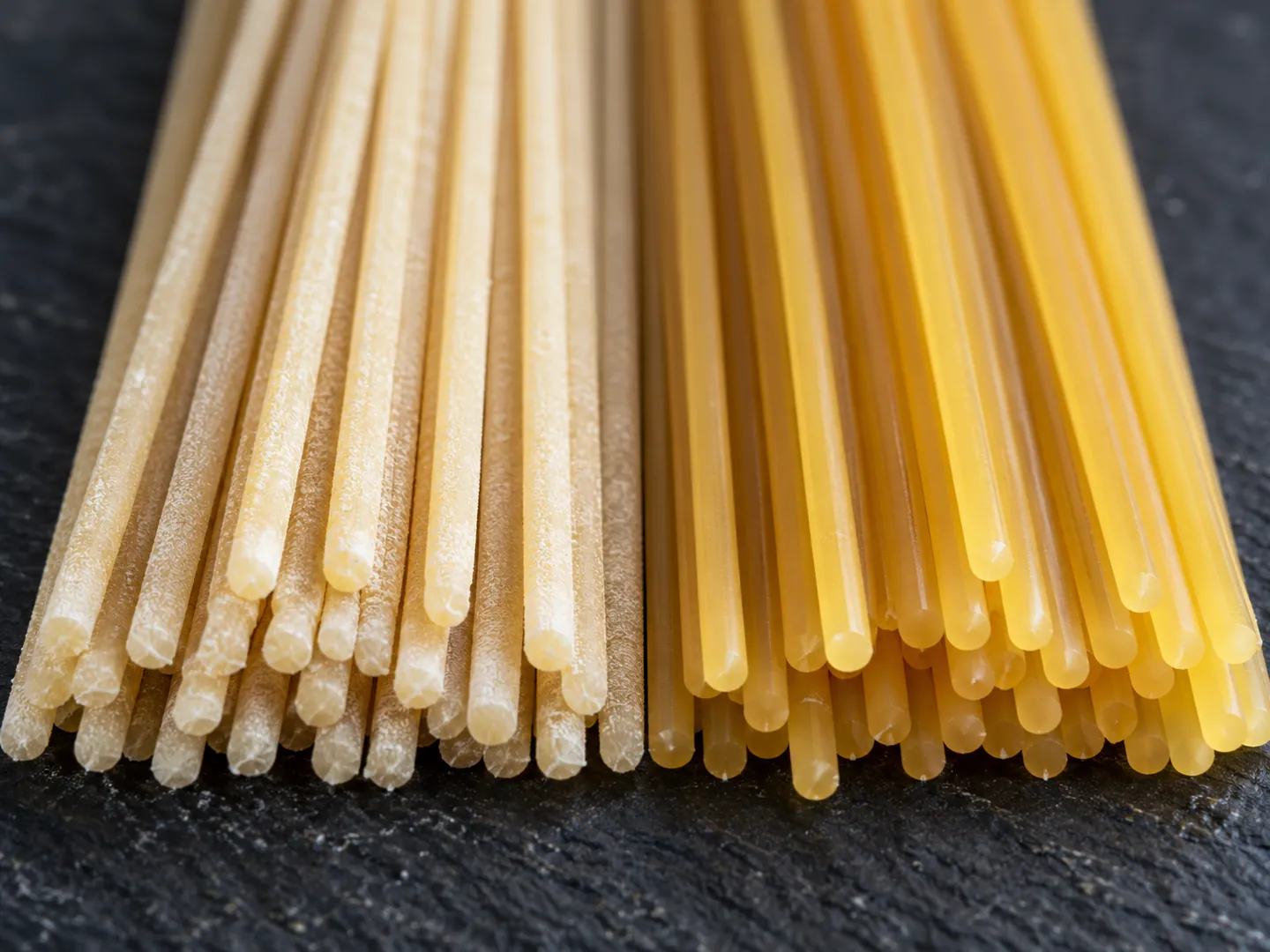
Bronze dies were the tradition. Non-stick PTFE dies became more widely used because they wear less, give a smoother surface and improve the look of dried pasta.
Smoother dies also let the dough pass faster. In the 2013 study, spaghetti with the smoother surface came out at a higher extrusion speed, had a higher bulk density and greater rupture strength.
07Questions
The dough is pushed through a die, a plate with shaped holes, so it comes out with a fixed cross-section. Most dried pasta is made this way.
Pasta pushed through dies made of bronze, the traditional material. Lab tests found it has the roughest surface of the die materials compared.
In tests at Kyoto University, bronze-die spaghetti cooked in about a minute less than spaghetti made with a non-stick PTFE die, because of its rougher surface.
Many chefs say so, but the researchers write that this claim remains to be empirically validated.
They last longer because there is less abrasion, give a smoother surface and improve the general appearance of dried pasta.
08Sources
ABOUT THIS NAME
doodlestruder.com is part of the DoodleSale portfolio. It isn't in an auction right now, but you can ask about leasing it.